
Why Buying An Apple II+ In 1979 Changed My Life

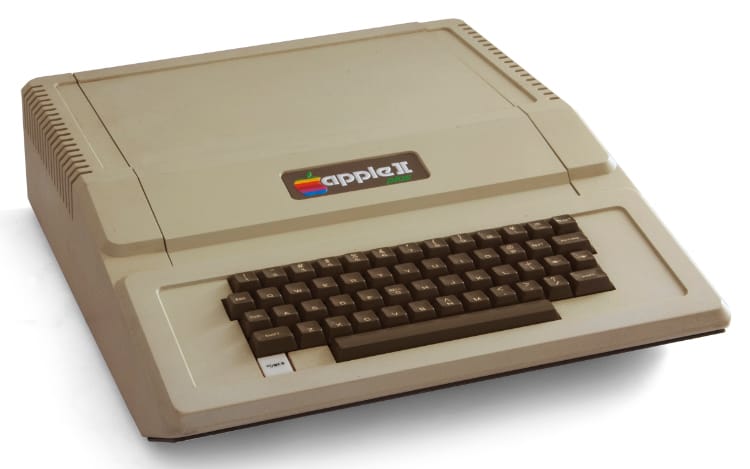
After graduating from college in 1979, I bought a then-new Apple II+ with what little money I had. Little did I know that everything that happened after that was not what I expected.
I went to graduate school in Chemistry, but my faculty advisor resigned after being denied tenure, leaving me unable to complete my degree. While I was accepted to my undergraduate school with an offer to pursue a PhD in Chemistry, I figured I needed to save a little money and got a job as a programmer at the local defense contractor. I expected to work only a couple of years before starting school again. Being a programmer as a career was not the plan.
I was hired despite having no college classes in programming or professional experience. My learning to program on the Apple II+, building small apps, including automating a food co-op, and playing around with 6502 and Z80 (via a card) assembly turned out to be just enough that my manager felt he could take a chance on me.
After a couple of years of success despite my lack of experience or formal training, I still had no intention of continuing. That is, until the time my one-week high-pressure writing of a VT-100 terminal emulator on an Apple II+ showed me that I should stick with programming. I would not have been able to do this without the home experiments. Without this week of insanity, I would have gone on to get a PhD, and everything would have been different.
I went on in 1985 to start an early Mac development company, and was one of the few to be at the Apple Developers conference in 1986 (at the Nob Hill Hilton in San Francisco), which was an amazing experience—every Mac developer in the world was there. We shipped our first product, Trapeze, in 1987. Sadly, we were forced to compete with Excel despite not actually being a Spreadsheet. But I moved on to start another company that helped build Persuasion for its author (the only real competitor PowerPoint ever had), and then built DeltaGraph over 5 years (which survived various owners until apparently dying during the pandemic).
The Mac market died, and my second company split up. I wound up working at Apple itself for half a year, when it seemed it was going out of business, I gave up and left. I remember being at the infamous meeting where all the departments met with the Copland OS team. If I had rotten tomatoes to sell, I would have made a fortune. After that disaster, I gave up and returned to Texas. Big mistake: a year later, Jobs returned to Apple, not to mention the dot-com gold rush was just starting. If I had stayed at Apple, I am sure that I would have been able to get along with Steve despite his reputation. Or I could have worked at Google, Netscape, or virtually anyone. Oh well.
Over the last decade of my career, I built iOS apps for three companies, the last of which was the biggest company I ever worked for, and what my team built was used every single day by around 120,000 people. In 2021, I retired after 40 years.
I still write code every day for my generative art on my Mac Studio, and it's all in Swift. The algorithms and processes I use are all my own, and aside from Affinity Photo and Rebelle, I write all my own code (I don't use p5.js or Processing, as most other generative artists do).
None of this would have happened without buying that early Apple II+. I had no way of knowing that my splurging on that purchase would have such far-reaching effects.
Today I have 3 iPads, an Apple Watch, a Mac Studio with an Apple Studio Display, and an iPhone, and I write all my code in Apple's Swift. Call me an Apple fanboi if you must, but it was that first Apple purchase that pointed me in a direction I never expected, and I have no regrets.